All 6 philosophical systems are called astika, i.e. they accept the Veda as authority. Charvakas, Buddhists and Jains are called nastikas, because they reject the Vedas.
Starting with nyaya philosophy, each darshana presents an increasingly complete understanding of Vedic knowledge.
1. Nyaya
Establishes rules of philosophical debate: soul, physical world, God, liberation.
2. Vaisheshika
Analyzes material nature and atomic theory.
3. Sankhya
Analytical process helping the soul to detach from matter.
4. Yoga
Awakens spiritual vision, allowing to see oneself separate from the body.
5. Karma Mimamsa
Directs the seeker towards the goals of Vedic ritualism.
6. Vedanta
Focuses on the supreme goal taught by the Upanishads.
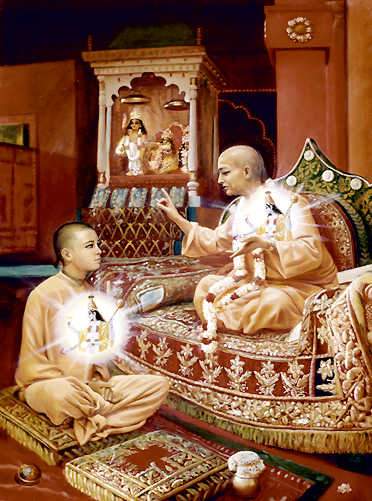
Previously all darshanas were chapters of a unified Vedic understanding, like faculties in a University. However, relatively recently these darshanas separated and became distinct schools. Some even used these darshanas for their own purposes. For example in 500 BC Karma mimamsa philosophy became very popular and brahmanas used it to justify the opening of massive animal slaughterhouses. This caused the spread of a new religion – Buddhism, which taught non-violence (ahimsa) and emptiness. When emperor Ashoka declared Buddhism as the state religion (250 BC), karma mimamsa's influence weakened.
In its turn Buddhism faded after the Vedantist Shankara (8th century AD) announced his doctrine and revived Vedic culture. However, his understanding of Vedanta was influenced by Buddhist philosophy and therefore did not represent true Vedanta, as announced by Vyasadeva.
Later teachers Ramanuja and Madhva presented their teachings, which reached the heights of philosophical thought and were well evaluated by modern thinkers.
Common features of the 6 philosophical systems
It has already been mentioned that all philosophical darshanas accept Vedic authority and are called astika. All darshanas were compiled and described in sutras by various Vedic sages:
Since they all draw knowledge from the Vedas, their teachings have many similar features: they all recognize that the soul is an individual spiritual being possessing eternal consciousness; the soul changes physical bodies one after another (reincarnation) according to the law of karma. The soul suffers due to contact with matter. The cessation of suffering is the goal of philosophy. The follower of each darshana followed the same sadhana – rules of purification, and control of senses and mind, which are part of brahmanical behavior.
Nyaya (Logic)
Compiler – Gautama (Akshapada)
The word nyaya means rule. The object of nyaya is true knowledge and the ways of acquiring this knowledge. Sometimes called tarka shastra – the science of argumentation. Sometimes called Anvikshiki – the science of critical inquiry, because nyaya analyzes the nature of knowledge and its source, as well as the reliability of knowledge.
This philosophy asserts that true knowledge about the external world and its relationship with the mind and soul, is the only way to be liberated. A person can be liberated from suffering if they know how to correctly use logical formulas and arguments and know how to apply them in their daily life. Thus the ultimate goal of nyaya is not merely to find means to distinguish true knowledge from false. The ultimate goal of nyaya philosophy is liberation.
16 Categories (Padartha)
All 6 philosophical systems study material phenomena and their relationship with the living being. In Nyaya philosophy these studies are divided into 16 categories:
1. Pramana – sources of knowledge.
2. Prameya – object of knowledge. There are 12 prameyas: atman (soul), sharira (body), indriya (5 senses), artha (objects of senses), buddhi (perception), manas (mind), pravriti (activity), dosha (defects of mind), pretyabhava (rebirth), phala (results), dukha (suffering), apavarga (liberation).
3. Samshaya – doubt in a state of uncertainty.
4. Prayojana – purpose.
5. Drishtanta – example.
6. Siddhanta – doctrine.
7. Avayava – 5 parts of inference: pratigya (proposition), hetu (reason), udaharana (example), upanaya (universal proposition), nigamana (conclusion).
8. Tarka – hypothetical arguments.
9. Nirnaya – outcome.
10. Badha – discussion.
11. Jalpa – wrangling.
12. Vitanda – irrational arguments.
13. Hetvabhasa – fallacious reasoning.
14. Chhala – unfair reply.
15. Jati – statements of a general nature based on false analogy.
16. Nigrahsthana – ground for victory.
The goal of life is to understand the twelve aspects of reality. Ignorance forces the living being to become confused in this reality. Pramana, or the method of correct knowledge, allows one to know prameyas correctly.
Pramana (Sources of Knowledge)
Prama means “correct knowledge”. 4 main pramanas:
1. Pratyaksha (direct experience)
Most people believe only in what they see or can touch. Nyaya sets strict requirements for direct experience. For such experience to be prama, it must be clear and undoubted.
There is laukika (ordinary) and alaukika (extraordinary) experience. Alaukika experience can be: samanya lakshana (perception based on similarities), jnana lakshana (based on association) and yogaja (intuitive perception).
2. Anumana (inference)
Consists of three parts: paksha (minor term), sadhya (major term) and hetu (middle term). A true statement is possible only when there is an undoubted connection (vyapti) between them.
3. Upamana (comparison)
4. Shabda (testimony)
Not every testimony is true. Valid testimony is only that which came from an apta – a person whose words and actions do not differ from what he thinks. The Vedas are considered wisdom written down by such holy sages. Shabda is the ultimate source of knowledge.
Vaisheshika (Atomism)
Author – Kanada (Uluka)
A special feature of this system is called – uniqueness (distinctiveness) – vishesha, therefore this system is called vaisheshika. Between nyaya and vaisheshika there is much similarity. However, there are two main differences: nyaya recognizes four independent ways of acquiring knowledge, vaisheshika only two (experience and inference), and divides all reality not into 16, but into 7 categories:
9 Dravyas (Substances)
Earth, water, fire, air, ether (space), time, direction, soul and mind.
In Vaisheshika, the smallest indivisible particle of matter is called paramanu, or atom. These atoms are eternal, because they have no parts and cannot be created or destroyed. However, the main elements of earth, air, water can be destroyed, because they are created from mixtures of various atoms.
Ether (space) is a substance not composed of atoms. Time and direction are also not directly perceptible.
The soul is considered eternal and all-pervading. It is the substrate of the consciousness phenomenon. There are two types of souls: individual soul and supreme soul. The mind manifests as an internal sense, which feels pain and pleasure.
24 Gunas (Qualities)
Note: Buddhi in Vaisheshika means perception or knowledge, unlike Samkhya's “intellect”.
Karma (activity)
Action can occur in a substance and cannot exist independently.
Samanya (generality)
The highest generality is existence itself – satta.
Vishesha (uniqueness)
Uniqueness is what distinguishes one eternal substance from another.
Samavaya (inherence)
It is a connection between objects that cannot be separated from each other (e.g. body and its parts).
Abhava (non-existence)
Non-existence of a thing in relation to other things or mutual non-existence.
“The world is in fact neither created nor destroyed. By the will of the Lord all material elements break down into atoms, and by His will in due time join into larger compounds.”
Samkhya (Analysis)
Author – Kapila Muni
Samkhya sums up the views of nyaya and vaisheshika on reality in two categories: Prakriti (matter) and Purusha (soul). Therefore it is called a dualistic philosophy.
In India there are two views on the creation of the world: satkaryavada (the effect is already in the cause) and asatkaryavada (vice versa). Samkhya belongs to the former (parinamavada) – the cause transforms into the effect.
Prakriti (Natural matter)
Samkhya disagrees that the world is created from atoms, because subtler elements (like mind) cannot arise from grosser ones. It seeks a single principle – prakriti. This is not a conscious principle, but an "exceptional possibility".
Prakriti is characterized by three gunas (qualities). They are the very essence of prakriti. When gunas are in balance, it is an unmanifest state (svaruparinama). When balance is disturbed (viruparinama), creation begins.
Purusha (Soul)
Purusha – an eternal, unchanging state of pure consciousness. All objects cannot be meant for prakriti, because it is unconscious. The enjoyer must be conscious – that is purusha.
Samkhya asserts that there are many souls, not one. All phenomena arise due to the relationship between prakriti and purusha.
The first transformation of prakriti is buddhi or mahat. From it arises ahankara (ego).
Yoga (Self-discipline)
Author – Patanjali Rishi
Yoga is the practical application of Samkhya. The word means "to link" – to link individual consciousness with the Supreme. Patanjali's yoga is also called Ashtanga yoga (eight-part system).
Patanjali yoga explains the nature of the mind (chitta). The highest goal is kaivalya. According to the level of agitation, the mind can be in 5 states: disturbed (kshipta); stupefied (mudha); restless (vikshipta); concentrated (ekagra); and well-controlled (niruddha).
Five modifications of the mind:
- Right knowledge
- Wrong knowledge (begins with avidya)
- Verbal delusion (fantasy)
- Sleep
- Memory
"The mind is like a lake, which is always calm in the depths, but waves on the surface prevent realizing this."
To help students, Patanjali describes the method of Kriya yoga (yoga of purification): austerities, study of scriptures and devotion to the Supreme.
Eight limbs of yoga (Ashtanga):
1. Yama (Prohibitions)
Non-violence (ahimsa), truthfulness (satya), non-stealing (asteya), sense control (brahmacharya), non-possessiveness (aparigraha).
2. Niyama (Observances)
Cleanliness (shaucha), contentment (santosha), austerity (tapas), study (svadhyaya), devotion to the Supreme (Ishvara pranidhana).
3. Asana (Physical postures)
Asanas are divided into two categories: a) for improving physical well-being and b) necessary for meditation. For meditation, the main four are: sukhasana, svastikasana, padmasana, siddhasana. The goal of asanas is to achieve samadhi.
4. Pranayama (Breath control)
Prana – the primary unit of energy. In our body there are ten main pranas (prana, upana, samana, udana, vyana etc.). Through breathing exercises a yogi can harmonize these life airs.
There are four types of pranayama: external (exhalation), internal (inhalation), intermediate and fourth (transcendental).
5. Pratyahara (Withdrawal of senses)
The senses constantly wander. Pratyahara is relaxation – withdrawal of senses from objects, "switching off" the connection with the mind.
6. Dharana (Concentration)
Effort to focus all attention on one object (usually a mantra, or an internal point like the solar plexus, between the eyebrows).
7. Dhyana (Meditation)
State of deep concentration where attention does not waver. In this state there are no emotions, thoughts, memory; siddhis are experienced.
8. Samadhi (Trance)
"State where all questions are answered". The mind no longer has a purpose to wander.
Two stages: 1) sabija (with seeds) – latent desires remain; 2) nirbija (seedless) – complete union with the Supreme Soul.
Karma Mimamsa (Ritualism)
Author – Jaimini Rishi
The word mimamsa means to analyze and thoroughly understand. The philosophical systems of Karma mimamsa and Vedanta are closely related. Karma mimamsa is like a threshold to Vedanta philosophy. It examines Vedic teaching in the light of rituals (Purva mimamsa), while Vedanta analyzes the same Veda from the perspective of transcendental knowledge (Uttara mimamsa).
The main goal of Karma Mimamsa is to present a practical methodology of Vedic religion for those seeking wealth (artha) and pleasure (kama). Therefore, it explains Vedic rituals materialistically, and gods – anthropocentrically.
Main occupation – to combine the self-discipline of yoga with the ritualistic part of the Vedas, to teach a selfish person duty. Vedic dharma is applied here for materialists as useful for people.
First systematic work – Jaimini Rishi's "Mimamsa Sutra". Later Kumarila Bhatta and Prabhakara founded two branches.
Defects of Systems
Vaisheshika's error
Vaishekas claim that atoms (nitya parimandalam) are the eternal cause. However, "Vedanta-sutra" (2.2.12) criticizes this: inert atoms cannot combine themselves without a conscious will or karmic impulse, which they do not possess.
Limitation of Yoga
Patanjali's method is sometimes called asat (false) in "Srimad Bhagavatam" if it ignores devotion to God. The Yoga sutras accept Ishvara only as a means for concentration, while Vedanta states that devotional service is the very essence of liberation.
Nyaya's liberation
Nyaya claims that upon liberation the soul loses consciousness (like a stone), because it considers consciousness only a product of the connection between soul and mind. Vedanta (2.3.17) states: jno 'ta eva – the soul is always knower.
Samkhya's dualism
Samkhya wrongly attributes activity only to matter (Prakriti), and considers the soul (Purusha) completely passive. Vedanta (2.3.33) states: karta shastrartha-vattvat – the soul must be the doer, otherwise scriptural injunctions "do this" would have no meaning.
Mimamsa's materialism
Jaimini considers rituals and their results the only reality, denying liberation from samsara. Vedanta (4.4.22) declares anavrttih shabdat – the liberated soul does not return.
Of all systems, only Vedanta (when explained by bona fide acharyas) is without defects. However, other systems contribute: Samkhya explains elements, Yoga – meditation, Nyaya – logic, Vaisheshika – categories, Mimamsa – rules of interpretation. The only perfect source is God Himself.
Vedanta (Conclusions)
Author – Vyasadeva
The word "Vedanta" means end of Vedas, the conclusion of Vedic studies. The culmination of the Vedas is the Upanishads, therefore they are called Vedanta. The word "Upanishad" means that which is heard sitting near the lotus feet of the spiritual master.
Although there are many Upanishads, 108 are recognized as authoritative. In them, sages presented a view of the Absolute, understood in three aspects: as Brahman (impersonal effulgence), Paramatma (Supreme Soul) and Bhagavan (Supreme Personality of Godhead).
Vyasadeva wrote the "Vedanta Sutra", which concisely explains the teaching of the Upanishads. Since it is difficult to understand, he wrote "Srimad Bhagavatam" – his own commentary. Unfortunately, not all schools accept this.
Interpretations of Vedanta range from extreme subjective idealism to objective personalism.
Classification of Vedanta schools:
Impersonalist schools (Advaita)
Mayavada – Doctrine of Maya. The world does not exist and the soul does not exist, only God and illusion exist.
Brahma parinama vada – Doctrine of God's transformation. God becomes the world and ceases to be God.
Jiva ishvara vada – God's consciousness fragments and He becomes living beings.
Vivarta vada – doctrine of covering. God comes into contact with Maya and becomes limited (human).
Personalist schools
Vishishta advaita vada (Ramanuja) – doctrine of qualified oneness. There is one God; living beings and the world are His attributes.
Dvaita (Madhva) – Doctrine of duality. God and souls are two eternally distinct realities.
Shuddha advaita (Vishnuswami) – doctrine of pure oneness. In a pure state souls do not differ from God.
Dvaita advaita (Nimbarka) – doctrine of oneness and duality.
Self-Check Questions
- List and briefly describe the 6 distinct Indian philosophical schools.
- Can it be said that any one of these schools is the only true one or superior to the others?
- Which philosophical school crowns all Vedic wisdom?
- What do the words astika and nastika mean?
- What does the word yoga mean?
- List the classification of Vedanta schools.